
Protein Molecular Weight Markers

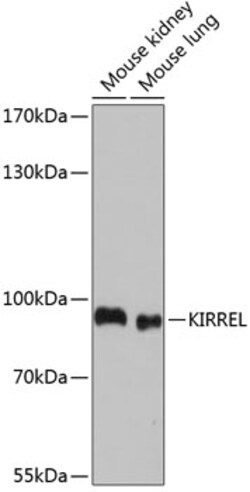
ABclonal Technology KIRREL Rabbit pAb

NEPH1 is a member of the nephrin-like protein family, which includes NEPH2 (MIM 607761) and NEPH3 (MIM 607762). The cytoplasmic domains of these proteins interact with the C terminus of podocin (NPHS2, MIM 604766), and the genes are expressed in kidney podocytes, cells involved in ensuring size- and charge-selective ultrafiltration (Sellin et al., 2003 [PubMed 12424224]).

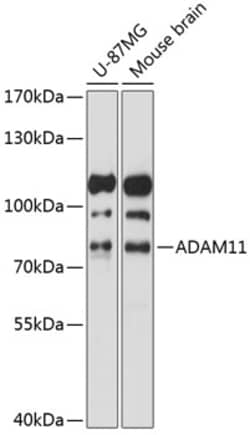
ABclonal Technology ADAM11 Rabbit pAb
This gene encodes a member of the ADAM (a disintegrin and metalloprotease) protein family. Members of this family are membrane-anchored proteins structurally related to snake venom disintegrins, and have been implicated in a variety of biological processes involving cell-cell and cell-matrix interactions, including fertilization, muscle development, and neurogenesis. The encoded preproprotein is proteolytically processed to generate the mature protease. This gene represents a candidate tumor suppressor gene for human breast cancer based on its location within a minimal region of chromosome 17q21 previously defined by tumor deletion mapping. Alternative splicing results in multiple transcript variants, at least one of which encodes an isoform that is proteolytically processed.
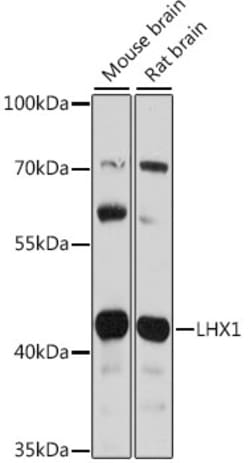
ABclonal Technology LHX1 Rabbit pAb
This gene encodes a member of a large protein family which contains the LIM domain, a unique cysteine-rich zinc-binding domain. The encoded protein is a transcription factor important for the development of the renal and urogenital systems. This gene is a candidate for Mayer-Rokitansky-Kuster-Hauser syndrome, a disorder characterized by anomalies in the female genital tract.

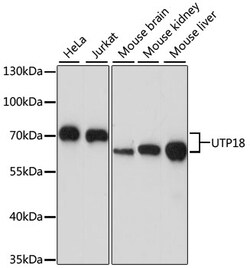
ABclonal Technology UTP18 Rabbit pAb
Enables RNA binding activity. Predicted to be involved in rRNA processing. Located in nuclear membrane, nucleolus, and nucleoplasm.
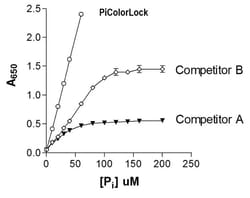
Abcam Phosphate Assay Kit - PiColorLockTM.
Phosphate Assay Kit - PiColorLockTM.
The product is subject to the following: Abcam Restricted Use Statement


ABclonal Technology DLX5 Rabbit pAb
This gene encodes a member of a homeobox transcription factor gene family similiar to the Drosophila distal-less gene. The encoded protein may play a role in bone development and fracture healing. Mutation in this gene, which is located in a tail-to-tail configuration with another member of the family on the long arm of chromosome 7, may be associated with split-hand/split-foot malformation.
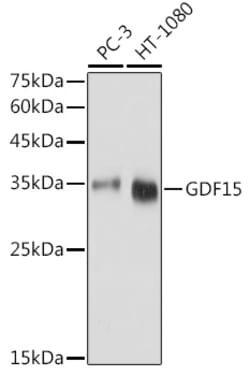
ABclonal Technology GDF15 Rabbit pAb
This gene encodes a secreted ligand of the TGF-beta (transforming growth factor-beta) superfamily of proteins. Ligands of this family bind various TGF-beta receptors leading to recruitment and activation of SMAD family transcription factors that regulate gene expression. The encoded preproprotein is proteolytically processed to generate each subunit of the disulfide-linked homodimer. The protein is expressed in a broad range of cell types, acts as a pleiotropic cytokine and is involved in the stress response program of cells after cellular injury. Increased protein levels are associated with disease states such as tissue hypoxia, inflammation, acute injury and oxidative stress.
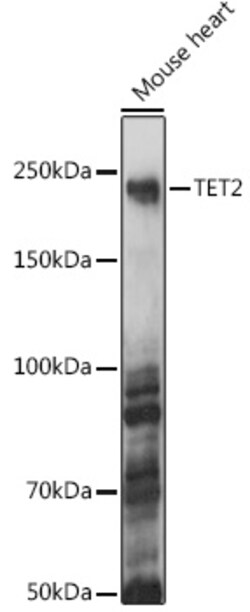
ABclonal Technology TET2 Rabbit pAb
The protein encoded by this gene is a methylcytosine dioxygenase that catalyzes the conversion of methylcytosine to 5-hydroxymethylcytosine. The encoded protein is involved in myelopoiesis, and defects in this gene have been associated with several myeloproliferative disorders. Two variants encoding different isoforms have been found for this gene.
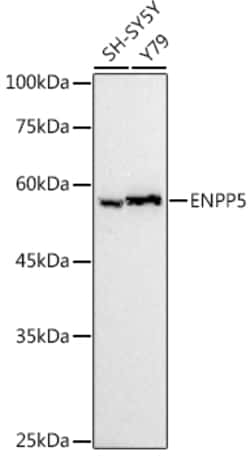
ABclonal Technology ENPP5 Rabbit mAb
This gene encodes a type-I transmembrane glycoprotein. Studies in rat suggest the encoded protein may play a role in neuronal cell communications. Alternatively spliced transcript variants have been described.
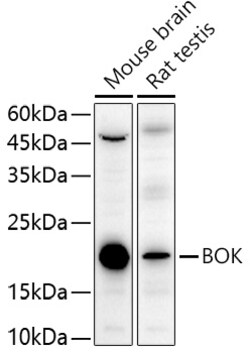
ABclonal Technology BOK Rabbit pAb
The protein encoded by this gene belongs to the BCL2 family, members of which form homo- or heterodimers, and act as anti- or proapoptotic regulators that are involved in a wide variety of cellular processes. Studies in rat show that this protein has restricted expression in reproductive tissues, interacts strongly with some antiapoptotic BCL2 proteins, not at all with proapoptotic BCL2 proteins, and induces apoptosis in transfected cells. Thus, this protein represents a proapoptotic member of the BCL2 family.
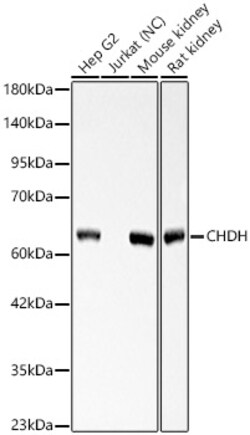
ABclonal Technology CHDH Rabbit pAb
The protein encoded by this gene is a choline dehydrogenase that localizes to the mitochondrion. Variations in this gene can affect susceptibility to choline deficiency. A few transcript variants have been found for this gene, but the full-length nature of only one has been characterized to date.
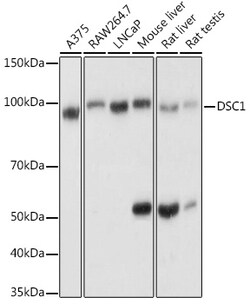
ABclonal Technology DSC1 Rabbit pAb
The protein encoded by this gene is a calcium-dependent glycoprotein that is a member of the desmocollin subfamily of the cadherin superfamily. These desmosomal family members, along with the desmogleins, are found primarily in epithelial cells where they constitute the adhesive proteins of the desmosome cell-cell junction and are required for cell adhesion and desmosome formation. A subtype of IgA pemphigus, a life-threatening autoimmune disease, is characterized by the presence of autoantibodies that target the encoded protein. The desmosomal family members are arranged in two clusters on chromosome 18. Alternative splicing of this gene results in multiple transcript variants. At least one of these variants encodes a preproprotein that is proteolytically processed to generate the mature protein.
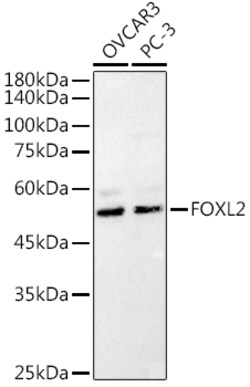
ABclonal Technology FOXL2 Rabbit pAb
This gene encodes a forkhead transcription factor. The protein contains a fork-head DNA-binding domain and may play a role in ovarian development and function. Expansion of a polyalanine repeat region and other mutations in this gene are a cause of blepharophimosis syndrome and premature ovarian failure 3.